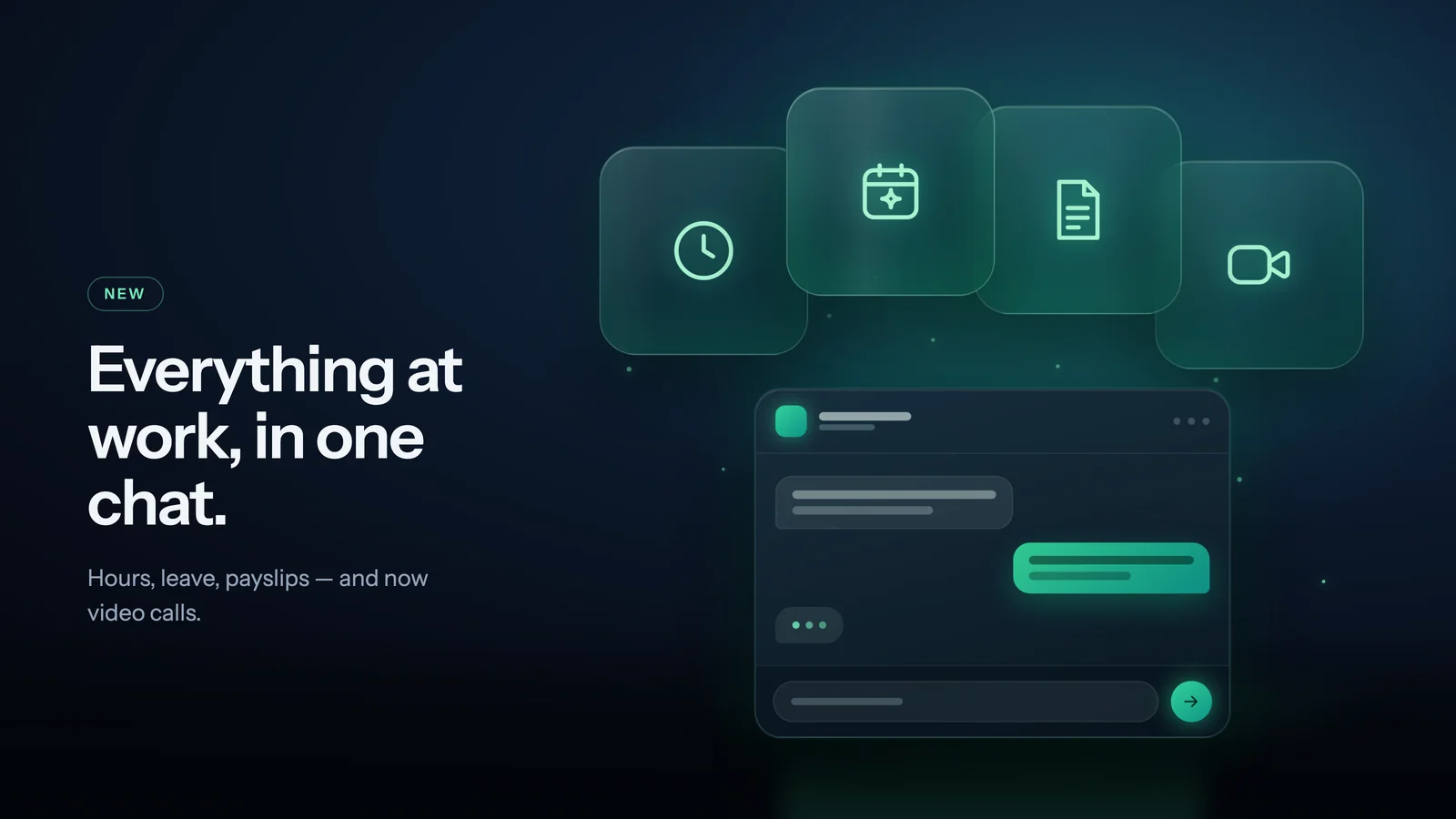
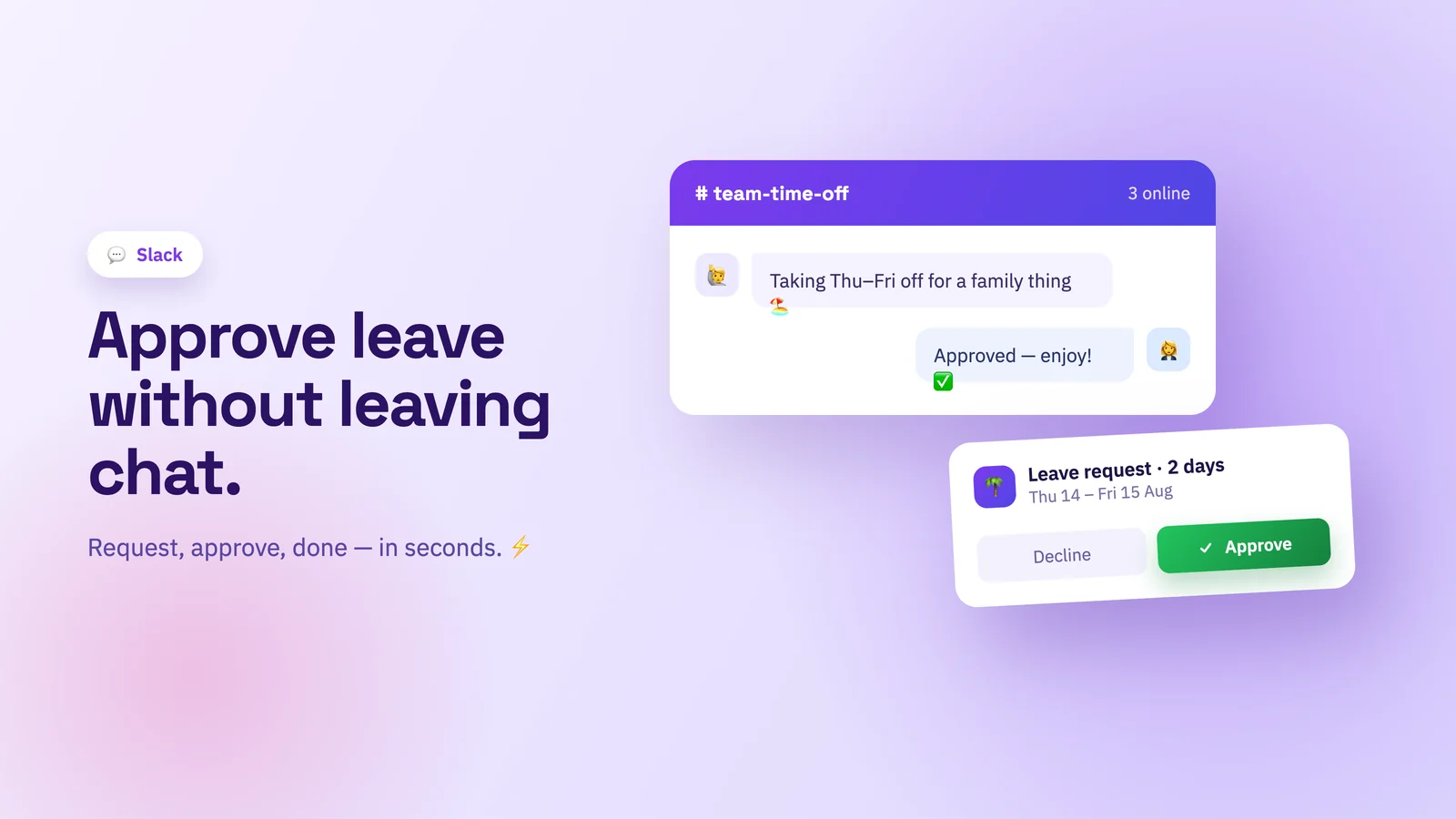
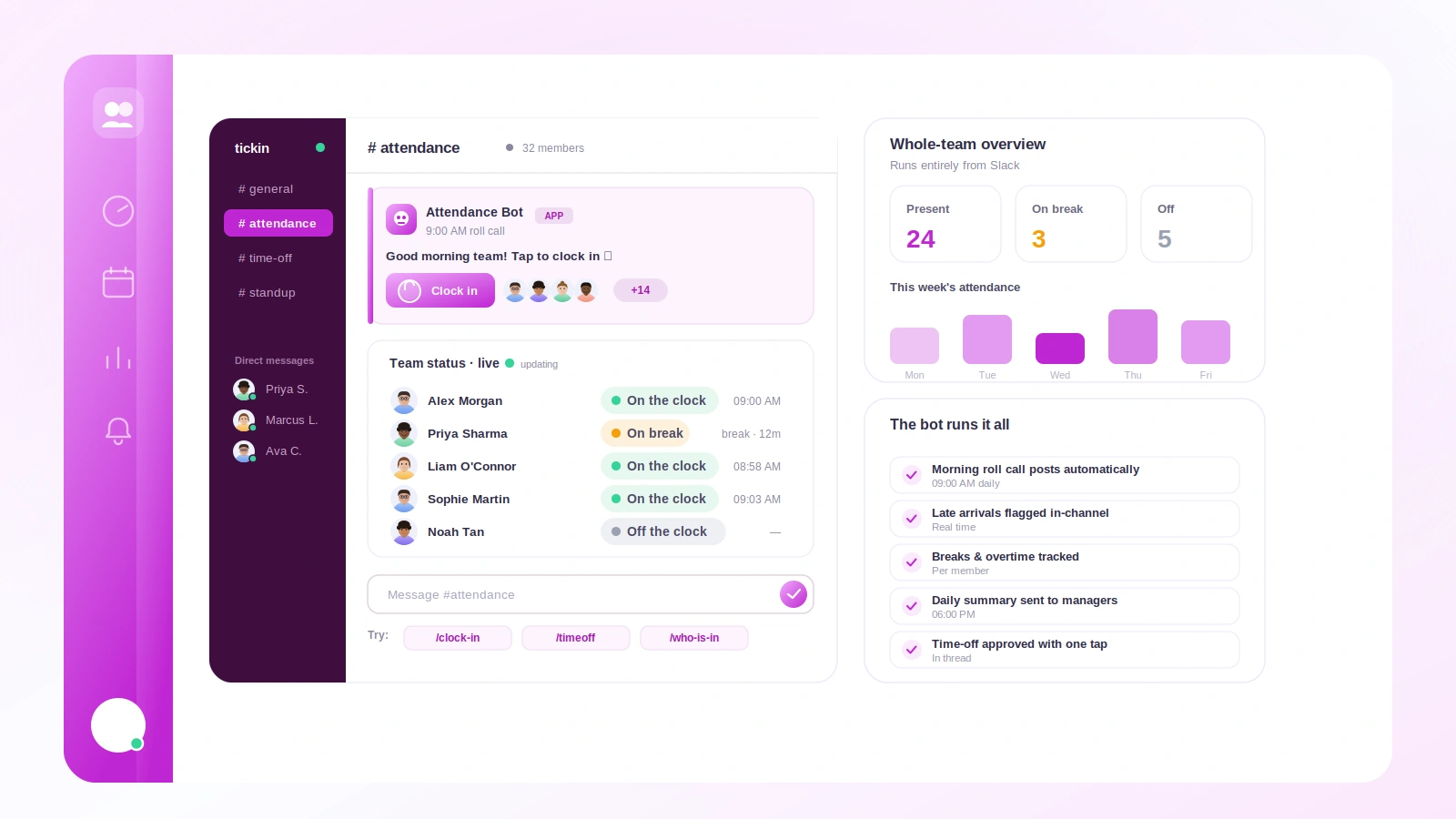
An HR Bot for Slack and Teams: Attendance Without Leaving Chat
How an HR bot for Slack turns chat into a full attendance and leave system, so managers approve requests without leaving Slack or Microsoft Teams.
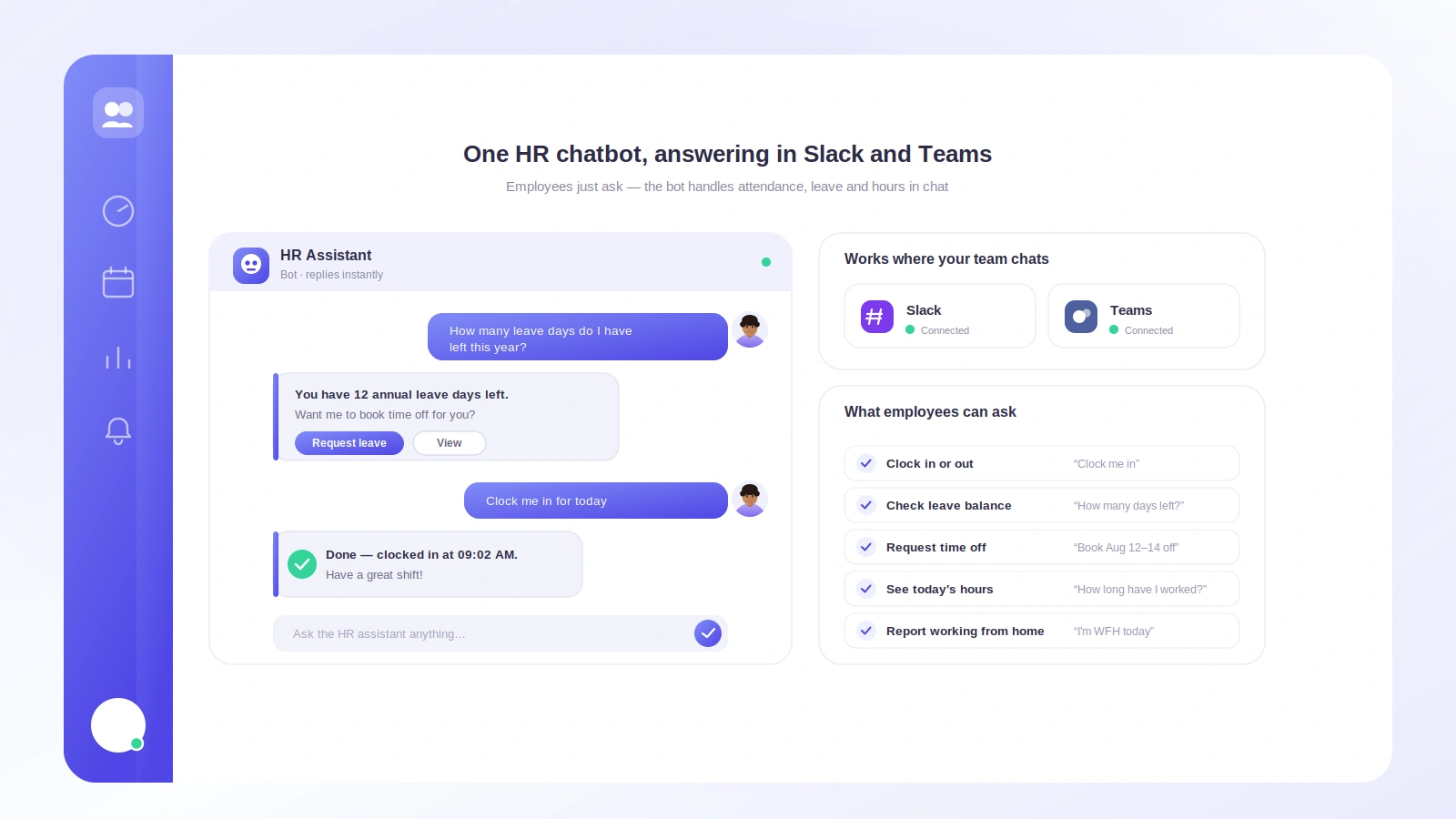
The promise of an HR chatbot is simple: stop making people leave the tool they work in to do routine HR. In practice, most bots only deliver the easy half, a clock-in command, and leave the real work, approvals and oversight, back in the browser.
A complete HR chatbot for Slack and Microsoft Teams closes that gap. It lets employees self-serve and lets managers actually run their team from chat: see who is in, look people up, and approve requests, without ever switching apps.
TL;DR
- An HR chatbot handles attendance, leave, and approvals inside Slack (or Microsoft Teams on the Scale plan).
- Tickin's bot covers both sides: employee self-service and full manager oversight.
- Managers monitor their team, look up reports, and approve leave and corrections from chat.
- Permissions are enforced on the server, so people only see what their role allows.
Attendance without leaving chat
For the whole team, the day runs on /tickin: /tickin start to clock in, /tickin break, /tickin end to clock out, plus leave requests and balances. Because it lives in Slack, or Teams on the Scale plan, it actually gets used, which is the entire point of tracking attendance in the first place. The employee side is genuinely self-serve, so HR fields far fewer questions.
Where managers get their time back
The manager experience is what separates a real HR chatbot from a clock-in gimmick:
- See the team.
/tickin team todayshows who is working, on break, late, on leave, or not checked in./tickin dashboardadds pending approvals and a needs-attention list. - Look anyone up.
/tickin empopens a searchable picker, no IDs, to pull a report's balance, attendance, profile, or history. - Approve in place.
/tickin approvalsand/tickin correctionslist pending leave and attendance corrections with Approve, Reject, and View Details buttons, using the same workflow and audit log as the web app. - Stay ahead. Late-arrival alerts, per-user notification preferences with
/tickin notifications, and scheduled reports with/tickin report subscribekeep managers informed without noise.
Built to respect roles
An HR chatbot handles sensitive data, so permissions cannot be an afterthought. Tickin checks every command on the server against the authenticated chat user. Employees see only themselves, team leads see only their direct reports, and admins reach the whole workspace, and search is scoped the same way, so a manager can never surface someone outside their team. Everything runs inside your workspace's own tenant boundary.
One system, two platforms
The chatbot is identical in Slack, and in Microsoft Teams on the Scale plan; only the card rendering differs. Admins get an extra layer, a workspace summary, organization-wide search, and company reports, so the same /tickin command scales from an individual employee to the whole company.
What an HR bot for Slack is not
The phrase "HR bot" invites a picture of something that answers questions in natural language — "how much leave do I have left?" typed as a sentence, and a conversational reply. That is not what this is, and the difference matters before you choose one.
Tickin's bot is command-driven. /tickin balance returns a balance; /tickin today returns today's hours. The commands are short and there is a picker for
people who would rather click than type, but you are steering a system, not
chatting with one. The upside is that it does exactly the same thing every time
and cannot misunderstand you, which is what you want from the record of
someone's pay and time off. The downside is that there is a small vocabulary to
learn — about six commands covers ordinary use.
It is also not an HRIS. There is no applicant tracking, no benefits administration, no performance review cycle. It covers attendance, leave, payroll and projects. If you need the deep HR modules, you will want a dedicated HRIS and this alongside it, not instead of it.
Where an HR bot pays for itself
The saving is not the seconds spent typing a command. It is the absence of the follow-up: the manager who no longer asks who is in today, the employee who no longer messages HR to ask their leave balance, the approval that no longer sits in an inbox for three days because it arrives where the approver is already looking.
Those interruptions are individually trivial and collectively the reason attendance admin feels heavier than it should. Moving them into chat does not make them faster so much as it makes them stop being interruptions at all.
The honest precondition is that your team actually lives in Slack or Teams. If they do not, an HR bot is a worse interface than a web page, and you should use the web portal instead — it has everything the bot has.
Try it
Attendance you never have to leave chat for is attendance that actually happens.
Start free with up to 10 employees — no credit card, and the Slack app installs in a couple of minutes. Start with the Slack attendance bot or the Microsoft Teams attendance bot, see everything in the Chat Command Center, or read how the same commands handle late-arrival alerts.