What Is a Payslip? What It Must Include and Why
What is a payslip? The record of how someone's pay was worked out: every component it must include and how gross becomes net, with a worked example.
What is a payslip?
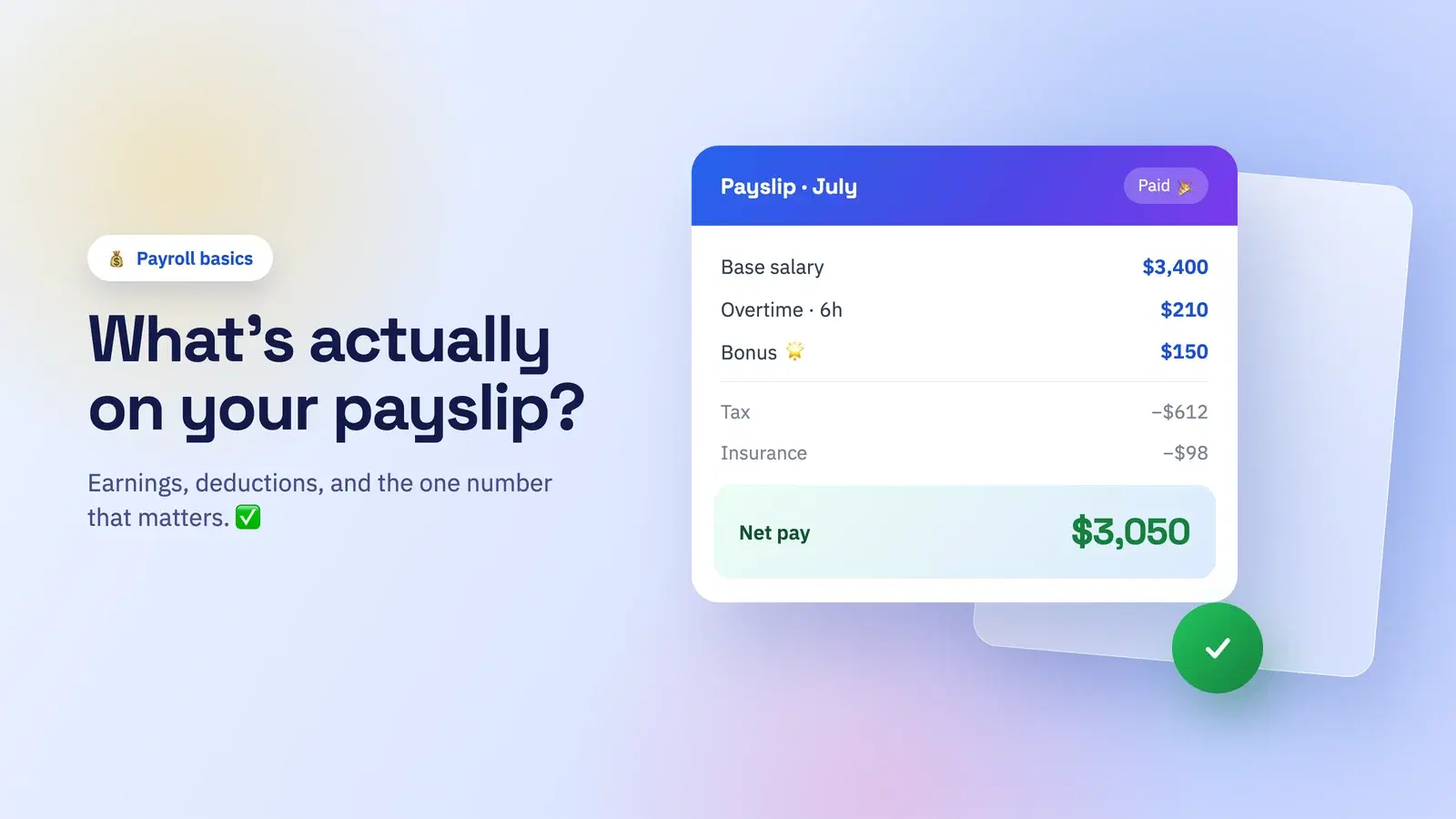
A payslip is a document that shows how an employee's pay for a period was calculated: gross earnings, each deduction on its own line, and the final net amount paid. It is a record both the employer and the employee can check the same arithmetic against. "Payslip", "salary slip" and "pay stub" are regional names for the same document.
Ask ten people what a payslip is and most will say "the thing that tells me what I got paid." That's half right. A payslip doesn't just tell you the final number, it shows you how that number was built — every hour, every addition, every deduction, laid out so you can check the math. The final figure is the least interesting part. The breakdown is the point.
That distinction matters, because a payslip that only shows a net amount isn't really a payslip. It's a receipt. A real payslip is a record.
TL;DR
- A payslip is a breakdown of how someone's pay for a period was calculated, ending in the net amount paid.
- It must itemize earnings, list each deduction separately, and show gross, deductions, and net so the arithmetic is verifiable.
- "Payslip", "salary slip", and "pay stub" are regional names for the same document.
- A clear payslip prevents disputes and is legally required in many countries; a mystery net figure is neither.
Payslip meaning: what the document actually is
A payslip is the itemized record of an employee's pay for one pay period — a week, a fortnight, or a month. It answers one question in full: how did we get from the work you did to the money in your account?
It exists for two reasons. First, transparency: both sides can look at the same document and confirm the same arithmetic, so nobody has to take pay on faith. Second, record-keeping: when a question comes up months later — a tax query, a disputed bonus, a leave balance — the payslip is the evidence. In many jurisdictions it's also a legal requirement with rules about what it must contain; the UK government's guide to payslips is a good example of the kind of detail regulators expect.
"Payslip" vs "salary slip" vs "pay stub"
If you've wondered whether a salary slip and a payslip are different things — they're not. Payslip (UK, much of Asia and Africa), pay stub (US), salary slip (South Asia), and wage slip are regional names for exactly the same document. The vocabulary changes with the country; the purpose doesn't. So "salary slip vs payslip" isn't a real distinction to worry about — pick the term your team uses and move on.
What's on a payslip: the components explained
A clear payslip has a predictable anatomy. Here's every component and why it earns its place.
| Component | What it shows | Why it matters |
|---|---|---|
| Identifying details | Name, pay period, pay date | Ties the slip to a person and a specific period |
| Gross earnings | Base pay + overtime + bonuses + allowances, itemized | Shows what was earned, not just the total |
| Hours & days | Hours worked, leave taken, unpaid days | Explains how variable pay was reached |
| Deductions | Tax, insurance, advances — each on its own line | Nothing hidden in a single "mystery" number |
| Gross → net | Gross, total deductions, net pay | Makes the final figure fully verifiable |
| Year-to-date (optional) | Running totals for the year | Helps with tax and personal budgeting |
The single rule that ties it together: if a line item can't be explained in one sentence, it doesn't belong on the payslip. Transparency is the whole job.
Itemized earnings
Base salary should sit on a different line from overtime, bonuses, and allowances. Rolling them into one "earnings" figure hides the story. If someone worked overtime, they should see it named and valued — which is exactly what our guide to how to calculate overtime pay walks through. The same goes for how breaks affect payable hours; see do breaks count as hours worked.
Each deduction on its own line
This is where trust is won or lost. Taxes, insurance, loan repayments, and advances each deserve their own line. A single lumped deduction invites the exact question a payslip exists to prevent: what is this and why? For the full breakdown of statutory vs voluntary and pre-tax vs post-tax, see payroll deductions explained.
From gross to net: a worked example
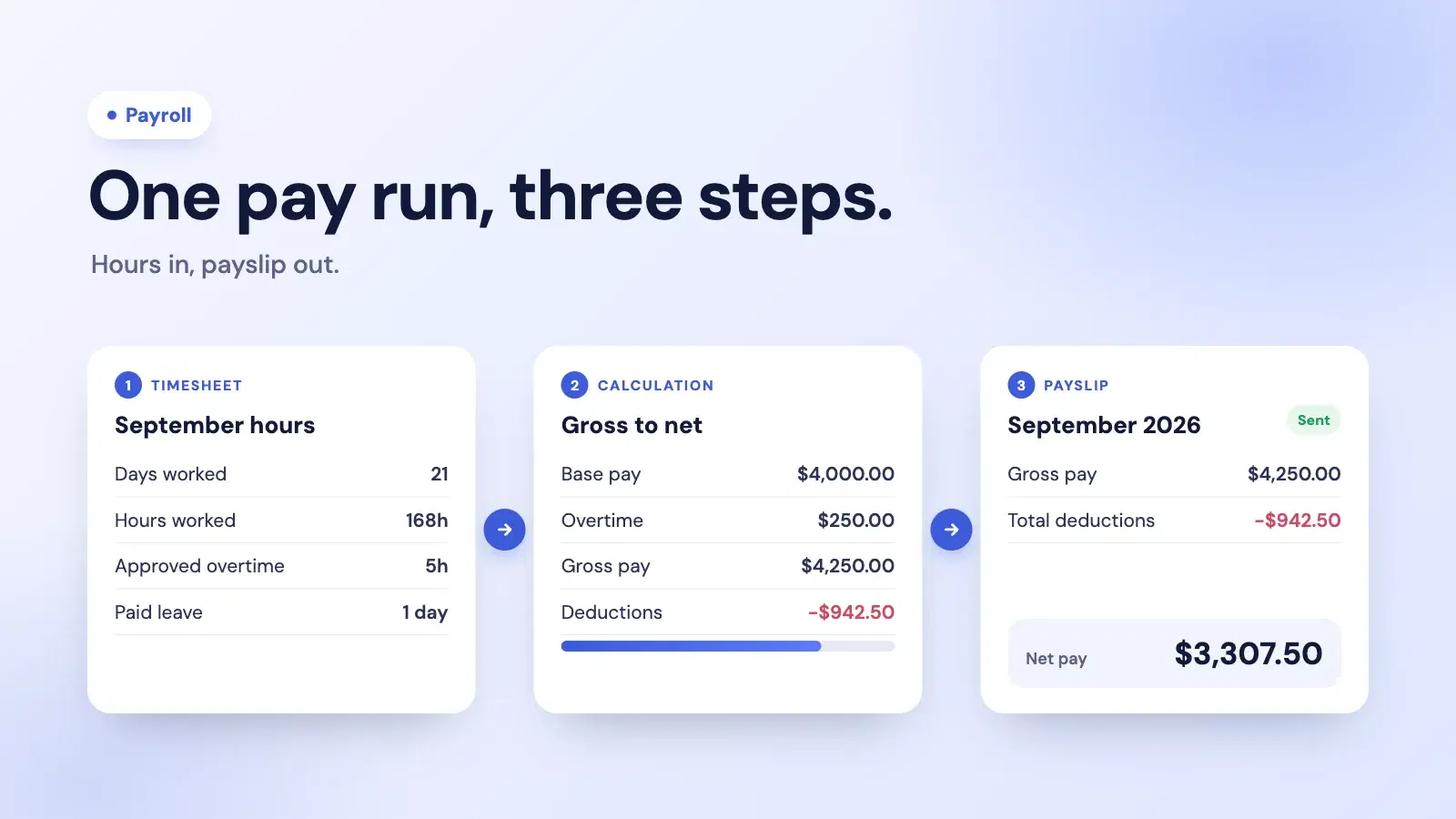
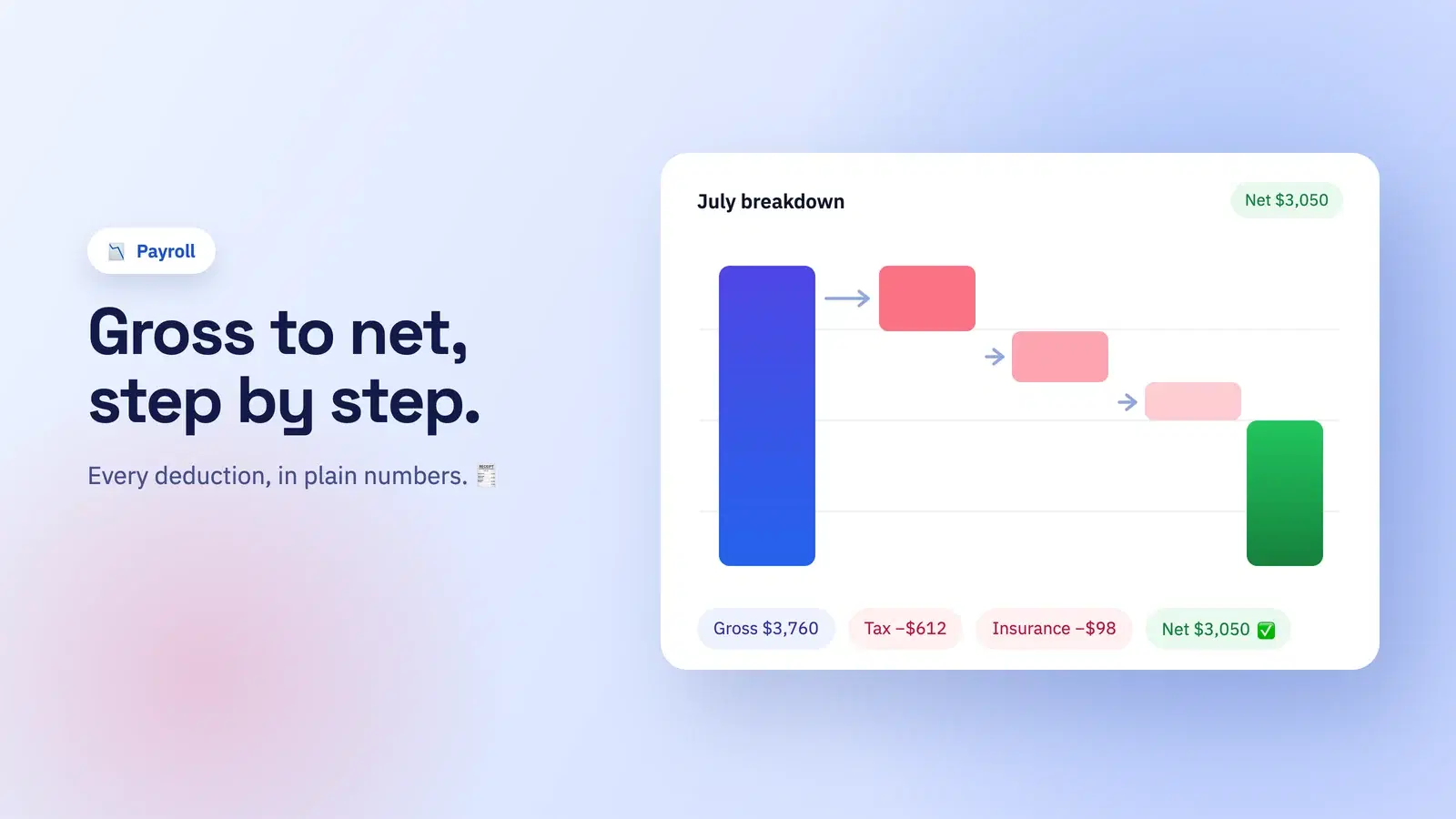
The core arithmetic of any payslip is gross minus deductions equals net. Concretely, for a monthly-paid employee:
| Line | Amount |
|---|---|
| Base salary | 100,000 |
| Overtime (8 hrs) | 6,000 |
| Gross pay | 106,000 |
| Income tax | −9,500 |
| Insurance | −2,000 |
| Salary advance repayment | −5,000 |
| Total deductions | −16,500 |
| Net pay | 89,500 |
Anyone reading this can follow it top to bottom and arrive at the same number. That's the test of a good payslip: not that it's pretty, but that it's checkable. Notice how much of it comes from data that lives elsewhere — hours, overtime, leave. That's why payslips are so error-prone when built by hand, a problem we cover in automate salary slips.
The income tax line is the one figure on a payslip that people most often want to verify independently, because it is the hardest to work out by hand. If you are paid in Pakistan, the Pakistan salary tax calculator applies the current FBR slabs to a gross salary and shows the monthly tax and net pay, so you can check the deduction on your own payslip against it.
Why a clear payslip is worth the effort
A vague payslip doesn't save time, it defers cost. Every unexplained figure becomes a question, every question a conversation, and every unresolved conversation a small dent in trust. A clear payslip pays that forward: fewer disputes, a clean audit trail, and people who understand their own pay. It's also, in many places, simply the law. Either way, the standard is the same — earnings itemized, deductions listed, arithmetic shown.
Doing this in Tickin
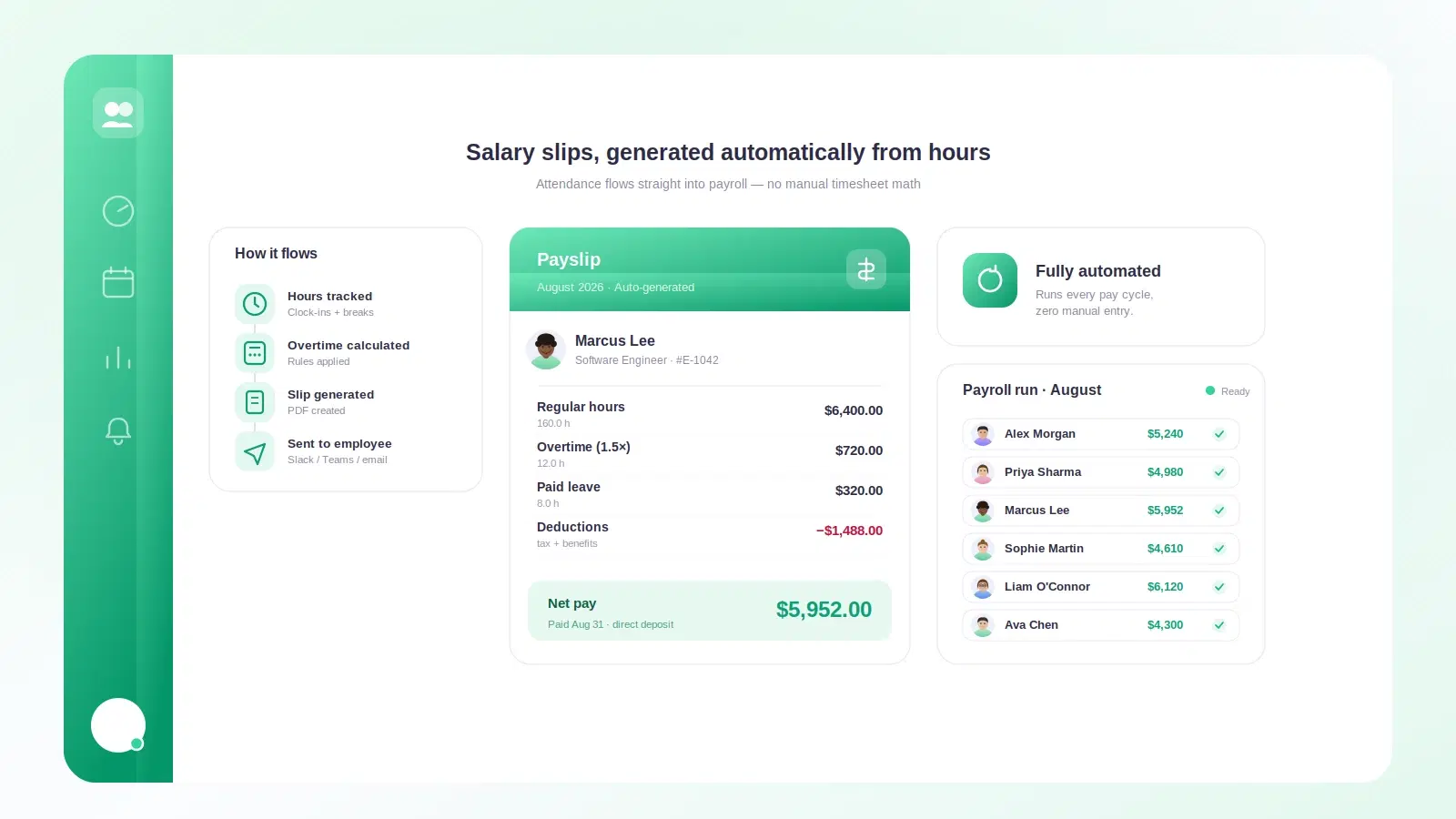
The reason payslips go wrong is that their numbers live in five places — attendance, leave, overtime, deductions, base pay — and get copied by hand into a template. Tickin removes the copying. Because clock-ins, breaks, leave, and overtime already live in one system, Tickin turns them into an itemized payslip automatically: earnings broken out, each deduction on its own line, gross-to-net shown, pro-rated correctly for mid-period joiners and unpaid days.
You get a payslip that passes the checkable test every cycle, without opening a spreadsheet. See the payroll feature, and if you run payroll manually today, the payroll processing checklist is a free place to start.
Tickin is free for up to 10 people, then $2 per employee each month on Starter.
Frequently asked questions
What is a payslip?
A payslip is a document that shows how an employee's pay for a period was calculated: gross earnings, each deduction on its own line, and the final net amount paid. It's a record both the employer and employee can check the same math against.
What must a payslip include?
At minimum: the employee and pay period, itemized earnings (base pay separate from overtime, bonuses and allowances), hours and days worked or taken, each deduction listed individually, and the gross, total deductions, and net figures so the arithmetic is verifiable.
Is a salary slip the same as a payslip?
Yes. "Salary slip", "payslip", "pay stub" and "wage slip" are regional names for the same document. The term varies by country, but the purpose is identical: a breakdown of how pay was calculated for a period.
Are employers required to give payslips?
In many countries, yes, and there are rules about what they must contain. Even where it isn't legally mandatory, giving a clear payslip is best practice because it prevents disputes and gives everyone a record to refer back to.
Where to go from here
A payslip isn't the number at the bottom — it's the story of how that number was built, told clearly enough that anyone can check it. Itemize the earnings, give every deduction its own line, and show the gross-to-net math. Do that and payday stops being a source of questions and becomes a source of confidence.
If you'd rather generate correct payslips than assemble them by hand, start with Tickin (payroll is on the Growth plan), then read automate salary slips to see how attendance and leave turn into payslips on their own.