How to Prevent Buddy Punching (7 Practical Ways)
What buddy punching is, why it costs more than people expect, and seven practical ways to prevent buddy punching — from honest policy to GPS and unique logins.
A café owner once told me she couldn't work out why her labor cost crept up every quarter even though the schedule never changed. The answer turned up on a slow Tuesday: one barista clocking in a friend who was still parking. It had become a habit, a small favor between colleagues. Nobody thought of it as theft. But the timesheet said hours that were never worked, and she paid for every one of them.
That is buddy punching, and it is the most common form of time theft precisely because it doesn't feel like stealing.
What is buddy punching?
Buddy punching is when one employee clocks in or out on behalf of another who is not there. The absent person is paid for time they did not work, so the hours on the timesheet are wrong and payroll is inflated. It is usually casual rather than malicious — a favour between colleagues covering a late arrival.
It is worth separating from two things it gets confused with. It is not a timekeeping mistake: a forgotten punch corrected afterwards is an error, and correcting it is the system working. And it is not the same as time theft generally, which covers long breaks, personal tasks on the clock, and padded hours. Buddy punching is the specific case where someone who is not present is recorded as present, which is why a policy alone rarely fixes it — the record has no way to tell the difference.
TL;DR
- Buddy punching is one employee clocking in or out for another, and it quietly inflates payroll with hours nobody worked.
- It thrives on shared terminals, honor-system punches, and unclear rules.
- No single control stops it; layer a clear policy, individual logins, and location or device verification for on-site work.
- Prevention beats detection, because padded hours look completely legitimate once they're on the timesheet.
Why buddy punching happens
Almost nobody sets out to defraud their employer. Buddy punching grows out of small, human moments: a friend running five minutes late, a shared punch clock by the door, a "cover for me" text. Because the hours look normal afterwards, it feels harmless.
That's exactly why it spreads. When clocking in is anonymous — a shared tablet, a code anyone can type, a manager marking people present — there's nothing to stop one person punching for another, and no record that they did. Fix the conditions and you fix most of the behavior.
Seven ways to prevent it
You don't need all seven. Start at the top and add controls until the risk fits your business.
| # | Control | Effort | Stops |
|---|---|---|---|
| 1 | Clear written policy | Low | Ambiguity and "didn't know it was wrong" |
| 2 | Individual logins | Low | Anonymous, shareable punches |
| 3 | Personal devices, not shared terminals | Low–Med | The shared-clock loophole |
| 4 | Location / geofence verification | Med | Punching in from off-site |
| 5 | Real-time visibility for managers | Low | Patterns going unnoticed |
| 6 | Photo or device checks | Med | On-behalf-of punches |
| 7 | Fair scheduling and grace periods | Low | The reason people cover for each other |
1. Start with a clear policy
Write down that clocking in for anyone else is time theft and a disciplinary matter — then say it out loud. Most buddy punching survives on the belief that it's a harmless favor. Naming it in your attendance policy removes that excuse and gives managers something to point to.
2. Give everyone their own login
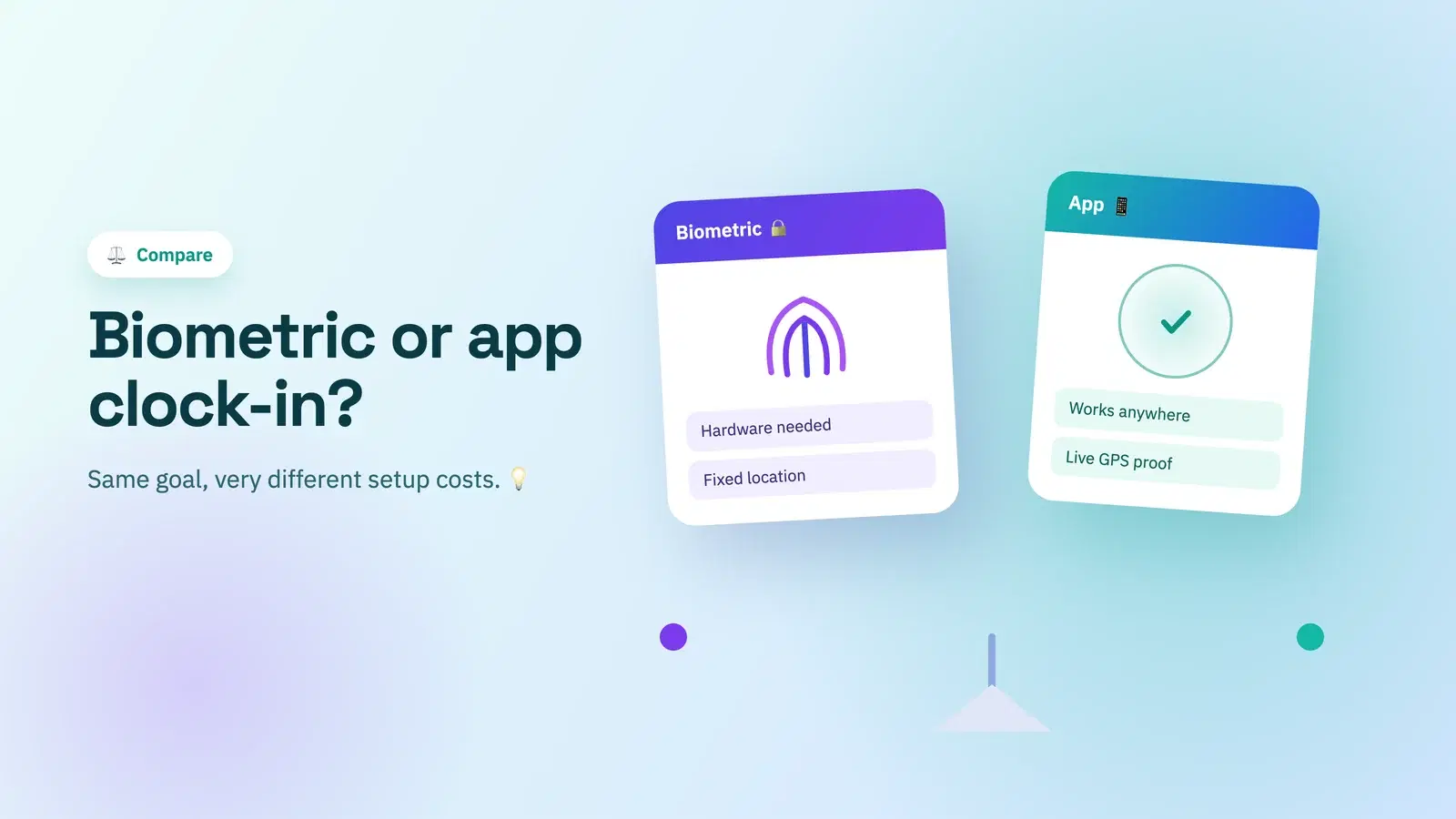
The single most effective structural fix. If each person clocks in under their own account — not a shared PIN taped to the wall — a punch is tied to an individual. It doesn't make impersonation impossible, but it ends the anonymous, everyone-knows-the-code loophole that most buddy punching relies on.
3. Move off shared terminals
A single tablet by the entrance is a buddy-punching machine: whoever's holding it can tap anyone in. When people clock in from their own phone or the web, the easy hand-off disappears. This also removes the morning queue at the clock, which is a nice bonus.
4. Verify location for on-site work
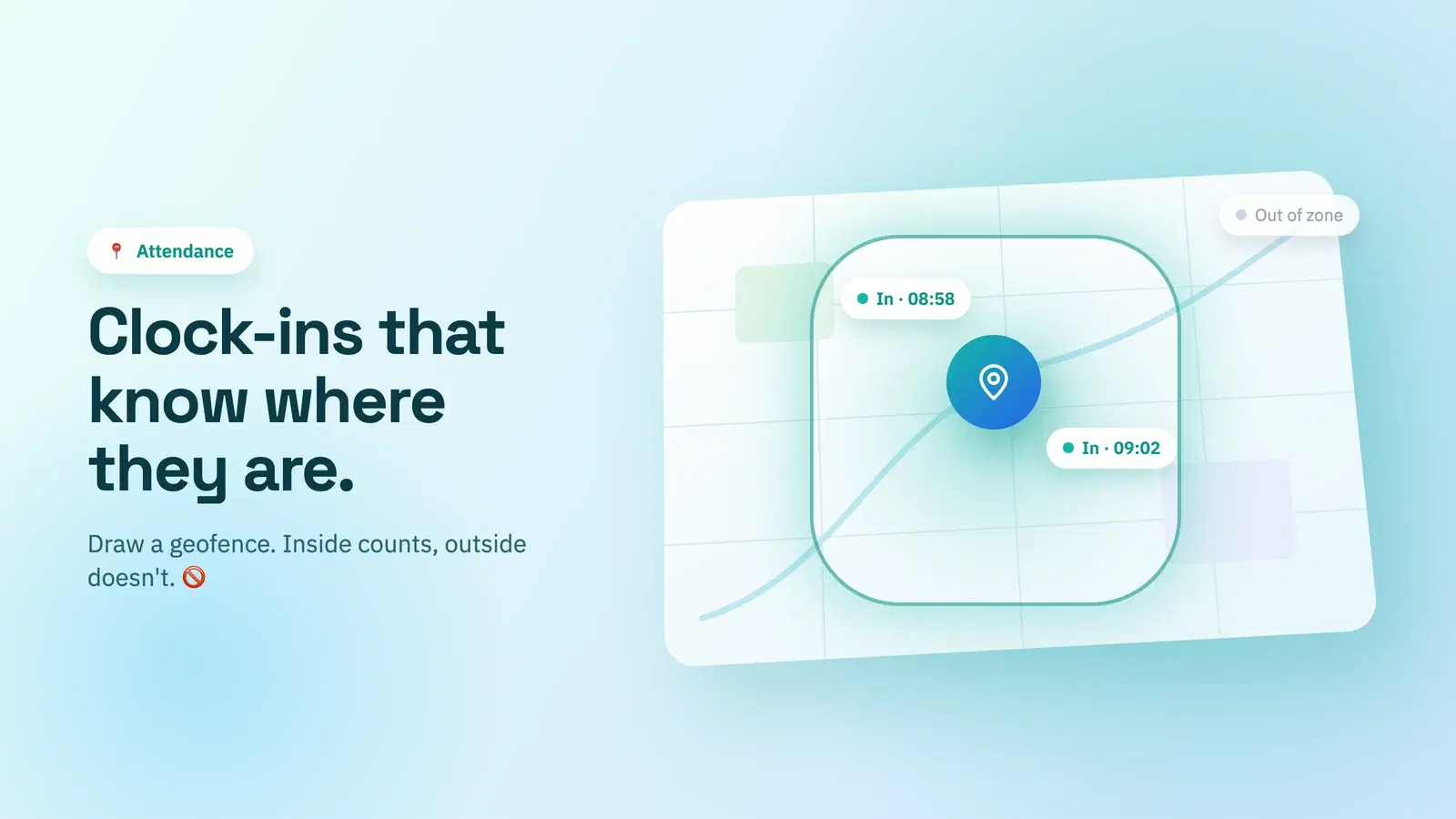
For field, site, and shift roles, add a geofence so a clock-in only counts from the actual place of work. Someone can't punch in a colleague who's still at home if the app checks the coordinates. We cover the how and the fairness trade-offs in GPS attendance and geofencing. Keep it to on-site roles — office and remote teams don't need it.
5. Give managers real-time visibility
Buddy punching hides in the gap between the punch and payday. If a manager can see who's clocked in right now, a name showing "present" while the person is visibly absent gets caught in the moment, not three weeks later during reconciliation. Visibility alone is a quiet deterrent.
6. Add a photo or device check where risk is high
For higher-risk environments, a quick photo at clock-in or a check tied to the person's own device makes punching for someone else obvious. Use it proportionately — it's overkill for a trusting ten-person team, and sensible for a large multi-site operation.
7. Fix the reasons people cover for each other
This is the one everyone skips. People buddy punch to protect a colleague from a punitive lateness rule. A fair, published grace period removes the panic that makes covering feel necessary. Solve the pressure and a lot of the behavior evaporates on its own. Clear rules also cut down on the disputes that follow — see reducing attendance disputes.
Prevention beats detection
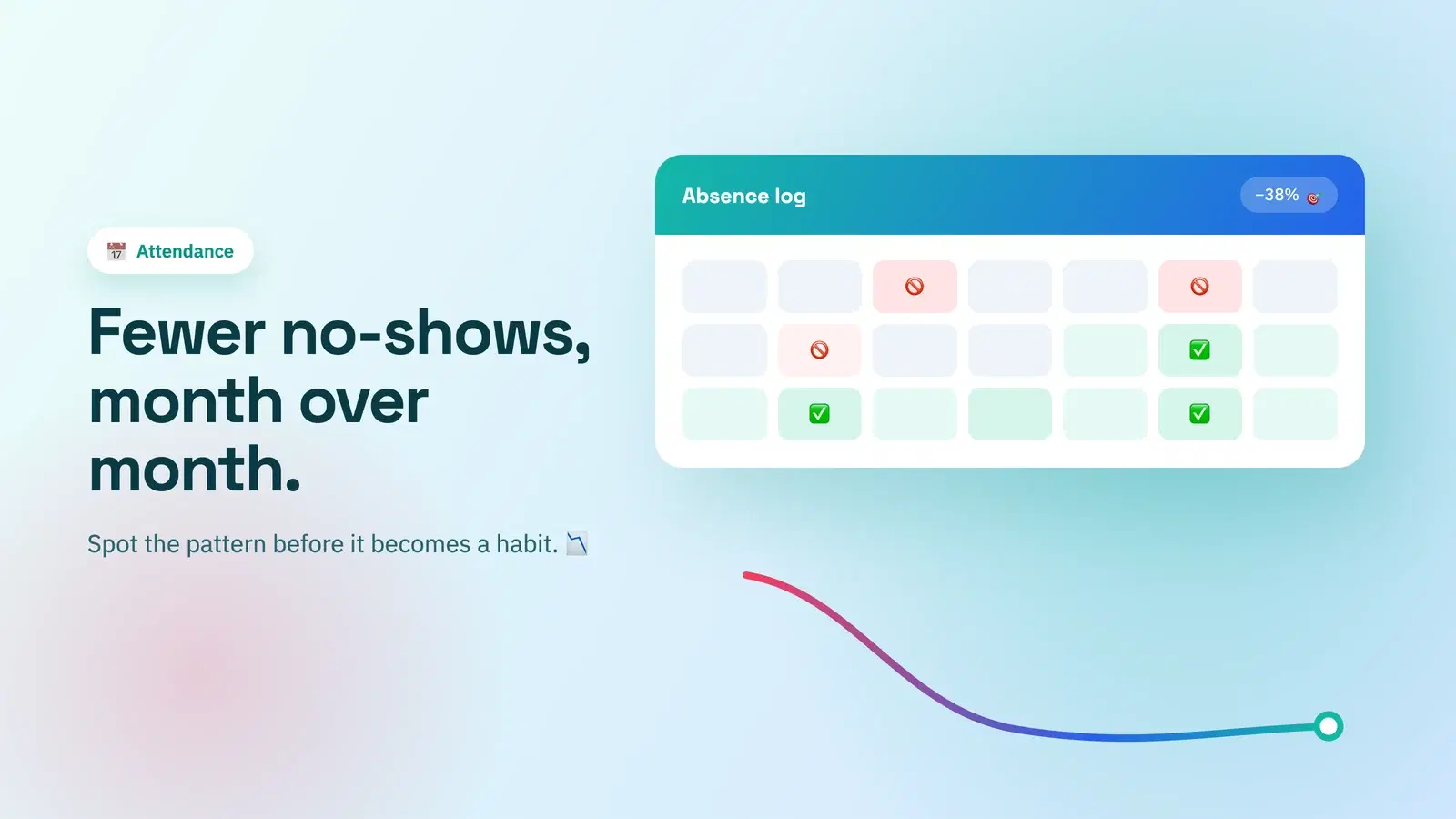
Here's the uncomfortable truth: once buddy-punched hours are on the timesheet, they look exactly like real ones. There's no anomaly to spot, no report that flags them, because everything appears legitimate. That's why chasing it after the fact almost never works. The win is in making it hard to do in the first place — individual logins, personal devices, and location checks where they fit — so the padded hours never get recorded at all.
Doing this in Tickin
Tickin is built so buddy punching has nowhere to hide. Everyone clocks in under their own account from Slack or the web, with Microsoft Teams on the Scale plan — their own device, no shared terminal or wall-mounted code to pass around. Managers see who's on the clock in real time, so a "present" that doesn't match reality stands out immediately. For field and multi-site teams, optional GPS geofencing ties each clock-in to an approved location, so nobody can punch in a colleague who isn't there.
And because Tickin makes fair rules easy — configurable grace periods and clear policies your team can actually see — you remove the pressure that makes people cover for each other in the first place. See the attendance tracking feature, or how it scales under workforce management for growing companies.
Tickin is free for up to 10 people, then $2 per employee each month on Starter.
Frequently asked questions
What is buddy punching?
Buddy punching is when one employee clocks in or out on behalf of another who is late, absent, or leaving early. It is a common form of time theft because it makes the timesheet show hours that were never worked.
How much does buddy punching cost employers?
Estimates vary, but even a few padded minutes per shift add up across a team and a year. Because the hours look legitimate on the timesheet, the cost is easy to miss and hard to claw back, which is why prevention beats detection.
What's the best way to stop buddy punching?
There is no single fix. The most reliable approach layers a clear policy, individual logins, and location or device verification for on-site work, so clocking in for someone else becomes difficult and obviously against the rules.
Is buddy punching illegal?
It is generally treated as time theft and payroll fraud, and it usually breaches company policy and can be grounds for discipline. Whether it rises to a legal matter depends on scale and local law, but it is never acceptable at work.
Where to go from here
Buddy punching isn't usually malice — it's habit growing in the cracks of a weak system. Close the cracks: give everyone their own login, get off the shared terminal, verify location where the work is on-site, and fix the harsh rules that make people cover for each other. Do that and the padded hours stop before they reach payroll.
Pick the two controls that fit your team and put them in place this week. When you're ready to make it effortless, start free with Tickin, then read GPS attendance and geofencing for the on-site half of the fix.