How to Reduce Employee Absenteeism (Causes and Fixes)
What causes employee absenteeism, how to measure your absenteeism rate, and practical, humane ways to reduce unplanned absence on your team.
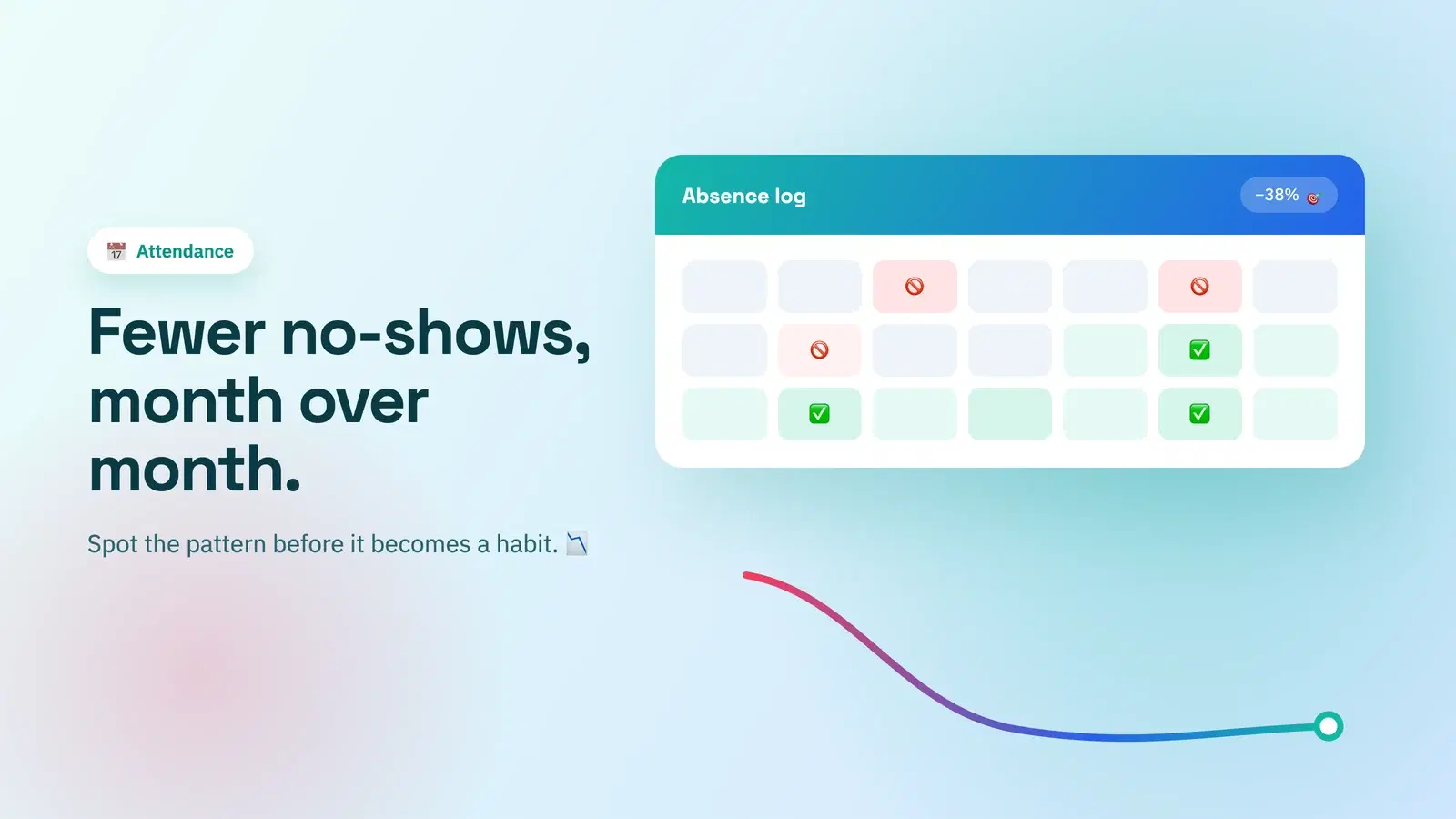
There's a version of managing absence that everyone recognizes and nobody enjoys: the manager who tracks every sick day with suspicion, the employees who feel policed, and an absenteeism problem that somehow never actually improves. Cracking down harder feels like doing something, but it usually just adds resentment on top of the absence.
Reducing absenteeism works better from the other direction. Understand why it's happening, measure it honestly, and fix the causes — most of which are about workload, clarity, and culture, not willpower.
TL;DR
- Absenteeism is a pattern of unplanned absence, not the occasional legitimate sick day.
- Measure it first: absenteeism rate = absent days ÷ available workdays × 100.
- The biggest causes are burnout, low engagement, and unclear or punitive rules — mostly addressable.
- Reduce it with clear fair policies and better workload management, not surveillance.
What absenteeism actually is
Absenteeism is habitual, unplanned absence from work beyond normal agreed time off. The distinction matters: someone taking their earned leave or a genuine sick day is not "absenteeism." A recurring pattern of frequent, unscheduled absences that the team has to absorb is. Conflating the two is the first mistake managers make — it turns legitimate rest into something suspicious and poisons the culture you're trying to protect.
So the target is narrow: reduce the unplanned, disruptive pattern, while leaving healthy, planned time off completely alone.
Measure it before you manage it
You can't reduce what you don't measure, and most teams have no baseline. The absenteeism rate is simple:
Absenteeism rate = (Absent days ÷ Available workdays) × 100
If a team has 500 available workdays in a month and 12 were lost to unplanned absence, that's a 2.4% rate. On its own, one number means little. Tracked over time, it tells you everything: is it rising, is it concentrated in one team, does it spike after busy periods? That's the signal that turns a vague sense of "people are out a lot" into something you can act on. A trustworthy attendance record is what makes this measurable in the first place — the same record that ends attendance disputes.
The real causes
Unplanned absence is usually a symptom. The common causes:
| Cause | What it looks like | Direction of the fix |
|---|---|---|
| Burnout / stress | Absence spikes after crunch periods | Workload, staffing, recovery time |
| Low engagement | Quiet, checked-out, frequent Mondays off | Culture, purpose, management |
| Punitive rules | People "call in sick" to avoid a rigid lateness rule | Fairer, clearer policy |
| Health / caregiving | Genuine, recurring personal demands | Flexibility, support |
Notice how few of these are solved by stricter enforcement. Most point back to workload and clarity.
How to reduce it (without becoming the absence police)
Five moves, in order of leverage:
- Write clear, fair rules. Ambiguity breeds both absence and disputes. A plain attendance policy and a sensible grace period remove the pressure that makes people call in sick to dodge a punitive lateness rule.
- Fix burnout at the source. If absence spikes after busy periods, the problem is the busy period, not the people. Staffing and recovery time do more than any policy.
- Make time off legitimate and easy. When taking a real day off is simple and guilt-free, people stop disguising it as sick leave. Good leave management reduces the murky "unplanned" category.
- Treat patterns as a conversation. A genuine pattern deserves a supportive one-to-one — "I've noticed, is everything okay?" — not a warning letter. Most patterns have a fixable cause behind them.
- Support flexibility where you can. For distributed teams especially, flexibility often eliminates the reason for the absence entirely; see tracking attendance for a remote team.
Doing this in Tickin
You can't reduce absence you can't see. Tickin gives you a clean, timestamped attendance record across web and Slack, with Microsoft Teams on the Scale plan, so the absenteeism rate is a number you can actually pull instead of a hunch. Patterns surface early — a rising trend, a team that's struggling — while there's still time to address the cause with a conversation rather than a crackdown.
Because leave and attendance live together, planned time off is easy to take and clearly separated from unplanned absence, which shrinks the murky middle where absenteeism hides. See the attendance tracking feature and how it fits a growing team under HR software for small businesses.
Tickin is free for up to 10 people, then $2 per employee each month on Starter.
Frequently asked questions
What is employee absenteeism?
Absenteeism is habitual or unplanned absence from work beyond normal, agreed time off. A single sick day isn't absenteeism; a pattern of frequent, unscheduled absences that disrupts the team is. The goal is to reduce the unplanned pattern, not to punish legitimate time off.
How do you calculate the absenteeism rate?
Divide the number of absent days by the total available workdays in a period, then multiply by 100. For example, 12 absent days across a team's 500 available workdays in a month is a 2.4% absenteeism rate. Track it over time to spot trends.
What are the main causes of absenteeism?
Common causes include burnout and stress, low engagement, unclear or punitive attendance rules, genuine health issues, and personal or caregiving demands. Many are addressable through workload, culture, and clear fair policies rather than enforcement.
How can a small team reduce absenteeism?
Measure it first so you know the baseline, write clear and fair attendance and leave rules, address burnout and workload, and treat patterns as a conversation rather than a punishment. Consistent, humane management reduces unplanned absence more than strict rules do.
Where to go from here
Absenteeism doesn't come down because you watch people harder. It comes down when you measure it honestly, fix the workload and clarity problems underneath it, and make legitimate time off easy enough that nobody needs to disguise it. Strict rules treat the symptom; fair systems treat the cause.
Start by getting a real baseline: start free with Tickin to see your attendance record clearly, then read attendance policy best practices to remove the ambiguity that drives a lot of avoidable absence.