Sick Leave Policy: A Practical Guide for Small Teams
How to write a fair sick leave policy for a small team: what to include, paid vs unpaid, notice and documentation rules, and examples you can adapt.
Nobody plans to be sick, which is exactly why a sick leave policy matters. When someone wakes up with the flu, the last thing they should be doing is guessing whether they'll be paid, who to tell, and whether they need a doctor's note for a single day. A clear policy answers all of that before the moment arrives — and a missing one turns every sick day into an awkward, ad hoc negotiation.
The goal isn't a legal document nobody reads. It's a short, plain set of rules that protects both sides and gets out of the way.
TL;DR
- A sick leave policy sets out how much sick leave people get, whether it's paid, how to notify, and when documentation is needed.
- Start from your legal minimum (statutory sick pay where it applies), then decide what to add on top.
- Keep sick leave separate from vacation so people don't come to work ill to protect their holiday.
- Require self-certification for short absences and a doctor's note only for longer ones.
Why a written sick leave policy matters
Without a policy, sick days get handled by whoever's asking and whoever's answering, which means they get handled inconsistently. One manager waves it through, another interrogates it, and employees learn to read the room instead of a rule. That inconsistency is what breeds resentment and, worse, presenteeism — people dragging themselves to work ill because they're unsure they'll be covered.
A written policy fixes the ambiguity. It says, in advance, exactly what happens when someone is sick, so the sick person can rest and the manager can plan. Clear rules are the same principle that makes an attendance policy work: certainty is kinder than discretion.
What to include
A good sick leave policy is short. These are the pieces that actually need to be in it.
| Section | The question it answers |
|---|---|
| Entitlement | How many sick days, over what period? |
| Paid or unpaid | Which days are paid, and at what rate? |
| Notification | How and when do I tell my manager? |
| Documentation | When is a doctor's note required? |
| Interaction with other leave | How does it relate to vacation and unpaid leave? |
| What happens when it runs out | Unpaid leave, or another arrangement? |
Entitlement, and the legal floor
Start with the law. Many jurisdictions mandate a minimum of paid sick leave or statutory sick pay, and you can't offer less. Above that floor, decide how much to give — a set number of paid sick days a year is the common shape — and whether it accrues or is granted up front, the same choice you make for vacation in how to calculate PTO accrual.
Keep it separate from vacation
This is the one design decision that matters most. If sick days come out of the same pool as vacation, people come to work sick to protect their holiday — spreading illness and hurting output. A separate sick allowance removes that incentive entirely. It's worth the small extra bookkeeping.
Notification and documentation
Say how to notify (a message to their manager before start time is typical) and when a note is needed. The humane, sensible rule: self-certification for short absences, a doctor's note only beyond a set number of consecutive days. Demanding proof for a single sick day is burdensome and reads as distrust.
A simple example to adapt
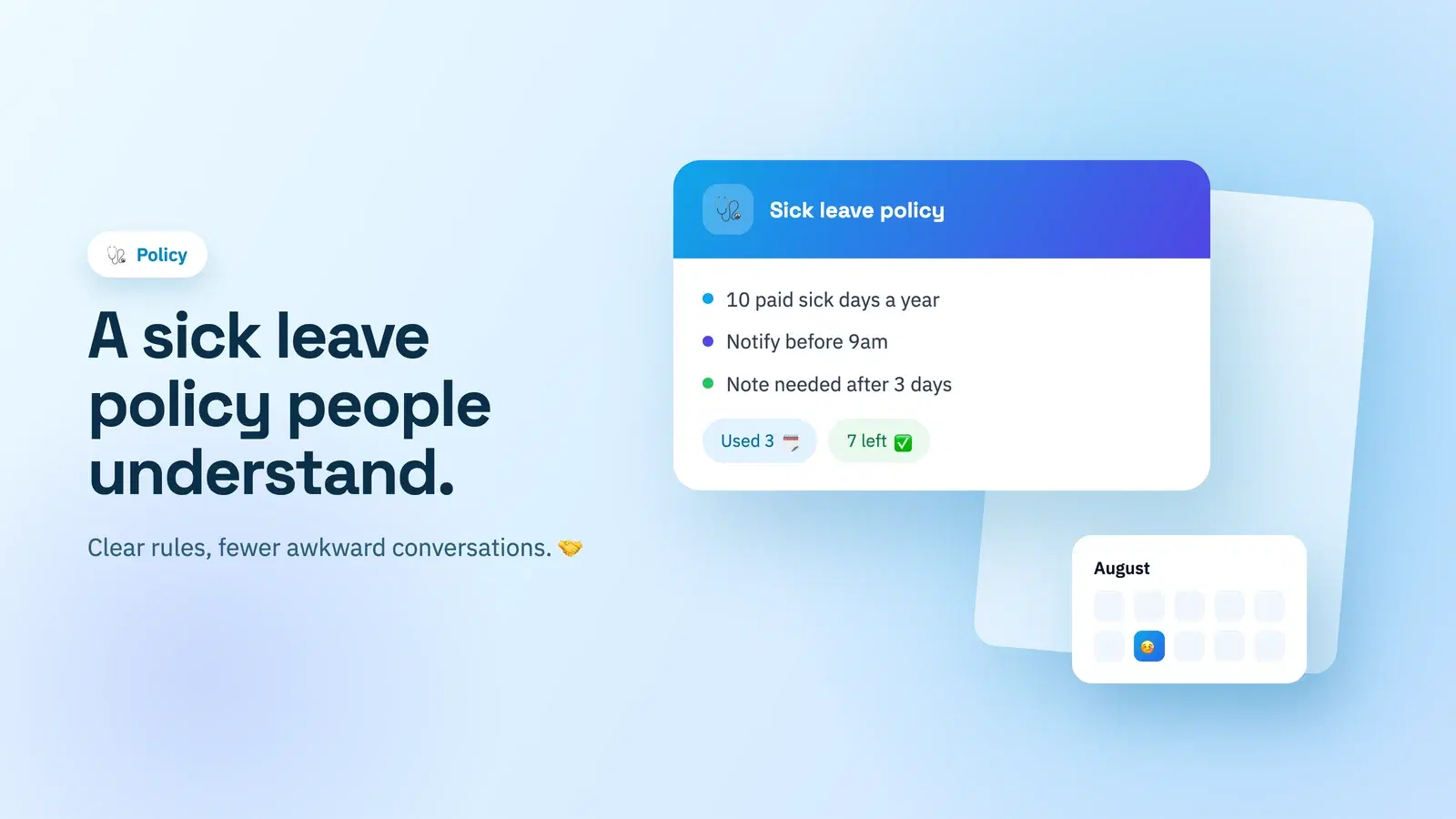
Sick leave. Employees receive 10 paid sick days per year, separate from annual leave. Notify your manager by message before your start time on any day you're unwell. Days 1–3 of any absence are self-certified; a doctor's note is required for absences of 4 or more consecutive days. Once paid sick days are used, further absence is taken as unpaid leave or, by agreement, from annual leave. Unused sick days do not carry over.
That's a complete, fair policy in five sentences. Adapt the numbers to your legal minimum and what you can sustain — the structure holds either way.
Doing this in Tickin
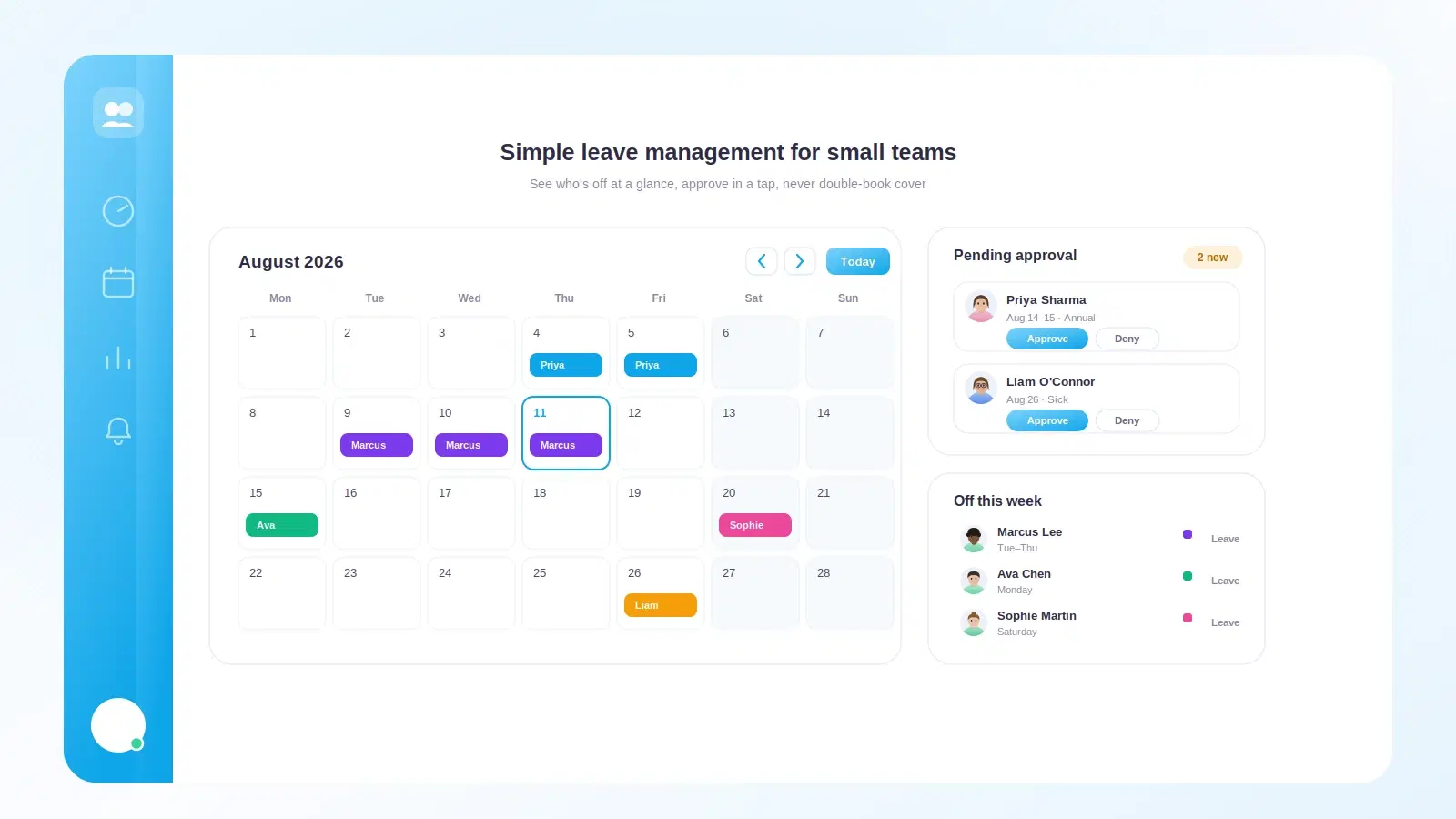
A policy only works if the tool enforces it consistently. In Tickin you set sick leave as its own leave type with its own allowance, separate from vacation, so balances never get muddled. People request a sick day from Slack or the web (with Microsoft Teams on the Scale plan), managers see it and approve in seconds, and every absence is recorded with a date and reason — giving you the audit trail and the pattern view without a spreadsheet.
Because sick leave sits beside attendance and payroll, paid sick days flow into pay correctly and unpaid ones are handled cleanly. See the leave management feature, and start your document from the free leave policy template. For the wider system, see leave management for small teams.
Tickin is free for up to 10 people, then $2 per employee each month on Starter.
Frequently asked questions
What should a sick leave policy include?
A good sick leave policy covers how much sick leave people get, whether it's paid, how and when to notify their manager, when documentation like a doctor's note is required, and how sick leave interacts with other time off. Keep it short and specific.
Is sick leave paid or unpaid?
It depends on your policy and local law. Many countries mandate a minimum amount of paid sick leave or statutory sick pay. Above that legal floor, whether extra sick days are paid, partially paid, or unpaid is a decision you set out clearly in the policy.
How much sick leave should a small team offer?
Start from your legal minimum, then decide how much to add. A common approach is a set number of paid sick days a year, separate from vacation, with clear rules for what happens once they're used up. Match it to what you can sustain and state it plainly.
Should you require a doctor's note for sick days?
Usually only for longer absences. Requiring a note for a single day is burdensome and signals distrust. A common rule is self-certification for short absences and documentation for anything beyond a set number of consecutive days.
Where to go from here
A sick leave policy isn't about policing illness — it's about removing the uncertainty that makes being sick stressful and being a manager inconsistent. Start from your legal minimum, keep sick days separate from vacation, ask for notice not proof on short absences, and write the whole thing in plain language people will actually read.
Draft yours this week from the leave policy template, then start free with Tickin to set sick leave up as its own tracked allowance.